Terrebonne's urban fabric expanded rapidly along the Rivière des Mille Îles after the 1970s, layering residential subdivisions and commercial corridors over Champlain Sea clay deposits and glacial till remnants. When a structural engineer needs to confirm bearing stratum depth or verify fill compaction beneath an existing slab, the quickest answer comes from an exploratory test pit. Our crews have opened dozens of trenches across Terrebonne—from the older Lachenaie core near Boulevard des Seigneurs to the newer La Plaine developments—documenting soil strata, groundwater bleed-in, and the real condition of buried footings. A test pit eliminates the guesswork that even a CPT log can leave when dealing with mixed urban fill, organic lenses, or cobble-rich till that deflects push probes.
A single 3-metre test pit in Terrebonne's Champlain clay often reveals more about construction risk than five boreholes in the wrong spot.
Methodology applied in Terrebonne
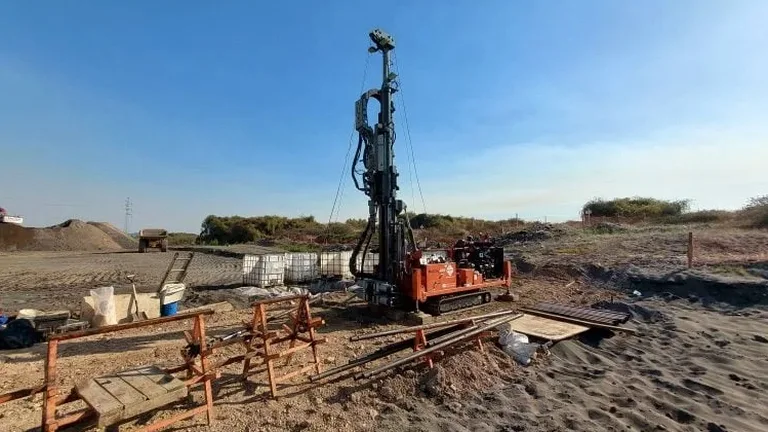
Local geotechnical conditions in Terrebonne
On Terrebonne jobsites we frequently see contractors treat a test pit as a quick look-see and then pour footings the same afternoon without lab data. That sequence backfires when the pit exposes desiccated brown clay that looks stiff but sits above 4 metres of soft grey Champlain Sea silt—material that consolidates under load and triggers differential settlement. Another common pattern: pit walls sloughing in during excavation because the operator ignored the 1:1 slope requirement for Type C soils under Quebec's safety code. We log the actual stand-up time of the exposed face because it tells the shoring designer exactly what they are up against. When the pit hits buried demolition debris—old concrete, brick fragments, timber—the bearing condition changes from uniform to erratic, and we flag it immediately so the structural engineer can widen the footing or switch to a mat foundation detail.
Our services
Our Terrebonne test pit program integrates directly with the geotechnical and structural workflow. Each pit produces a field log, photo record, and lab-tested parameters delivered within 3 business days.
Foundation Exposure and Verification
We expose existing footings to measure width, depth, and concrete condition, then log the bearing stratum directly beneath. Used for building additions, underpinning design, or forensic investigation of settlement cracks in older Terrebonne bungalows.
Fill Compaction and Utility Corridor Assessment
For road widening along Montée des Pionniers or sewer trunk installations near Rivière des Mille Îles, we dig cross-trench test pits at 50-metre intervals, run density tests on compacted utility backfill, and verify pipe bedding gradation against the city's standard drawings.
Questions and answers
How much does an exploratory test pit cost in Terrebonne?
For a single test pit to 3.0–3.5 metres depth on a typical Terrebonne residential lot, the cost ranges from CA$630 to CA$1,070. The price includes the excavator with operator, geotechnical logging by an engineer, field moisture testing, collection of disturbed samples, photographic documentation, and a signed report with stratigraphic log. If you need multiple pits on the same day, the unit cost drops because mobilization is spread across the program.
What safety measures do you follow when excavating test pits in Terrebonne?
We follow the CNESST excavation safety code for Quebec. For pits deeper than 1.2 metres, we slope the walls back at a minimum 1:1 angle for Type C soils or install a trench box if space is tight. No personnel enter a pit deeper than 1.2 metres without a protective system. Each site gets a tailgate safety briefing before the excavator starts, and we check for underground utilities via Info-Excavation before breaking ground.
How long does a test pit investigation take from start to report?
Fieldwork for a single test pit typically takes 2 to 3 hours, including excavation, logging, sampling, and compacted backfill. We deliver the geotechnical report with stratigraphic log, field test results, and foundation recommendations within 3 business days. Rush reporting in 24 hours is available for time-sensitive projects like emergency foundation repairs or fast-track permit submissions.
What information does the test pit report include?
Each report contains a detailed stratigraphic column with layer descriptions per ASTM D2488, measured depths of each stratum, groundwater observation notes, stand-up time of the pit wall, field moisture content readings, photos of the excavated face, and a summary of lab test results if samples were taken. We also include practical recommendations for footing depth, allowable bearing pressure, and any dewatering or shoring requirements specific to the conditions we encountered.