Terrebonne sits at 13 meters above sea level. That number matters because it tells you how close we are to the Mille Îles River and the water table. When you put a building on piles here, you are punching through 20 to 30 meters of Champlain Sea clay before you hit anything competent. In our track record, this clay can lose 80% of its strength when remolded. So the pile design has to account for setup time, negative skin friction, and the real risk of lateral spreading if seismic loads come into play. We have pulled samples from the Des Prairies sector where the undrained shear strength was under 15 kPa at 10 meters depth. That changes everything. A CPT test gives us a continuous profile of that soft layer, and we often combine it with test pits to inspect the crust near the surface.
In Terrebonne's Champlain clay, pile capacity is not about the tip. It is about the skin friction you can mobilize in the till below.
Methodology applied in Terrebonne
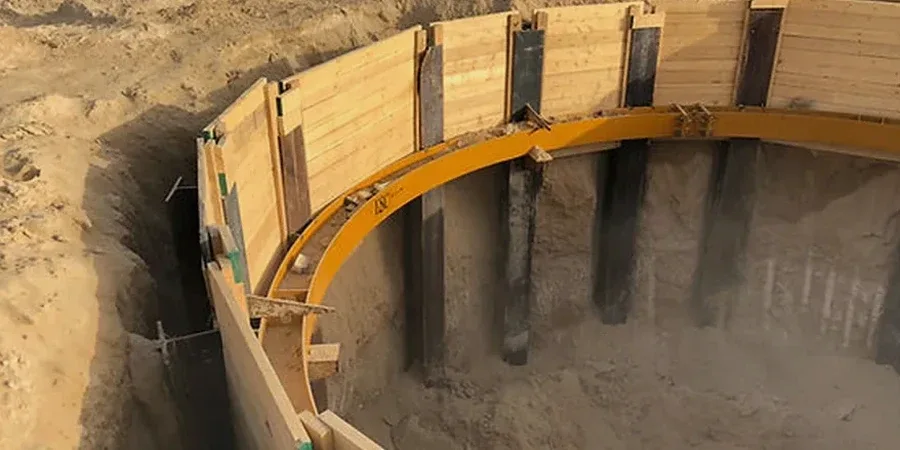
Local geotechnical conditions in Terrebonne
The rig we bring to Terrebonne is a track-mounted drill with hollow-stem augers and an automatic SPT hammer. It has to sit on timber mats because the clay crust can pump water under track load. The biggest risk we see is not the soft clay. It is the transition zone. That is the last meter of clay just above the glacial till. Pore pressure builds up there during driving and takes days to equalize. If you test the pile too soon, you get a false low capacity. We monitor pore pressure dissipation with a vibrating wire piezometer installed at the pile toe. That data tells us when the soil has "set" and the pile is ready for restrike or static testing. Ignoring that lag time leads to piles that settle later, even if the initial blow count looked fine. In Terrebonne, we always wait at least 72 hours after driving before final verification.
Our services
Our pile design process in Terrebonne brings together field investigation, lab testing, and capacity analysis in one workflow.
Driven Pile Capacity Analysis
We compute axial capacity using CPT-based methods (LCPC, Schmertmann) and SPT correlations calibrated for Champlain clay. Negative skin friction estimates follow CFEM guidelines, with settlement checks under service loads.
Pile Integrity and Load Testing
We run static load tests per ASTM D1143 and low-strain integrity tests on installed piles. The results are correlated with the site investigation data to close the loop between design assumptions and as-built performance.
Questions and answers
What makes pile design different in Terrebonne compared to Montreal?
Terrebonne sits on the north shore of the Mille Îles River. The Champlain clay here is generally thinner than in central Montreal, but it is more sensitive. We often find the glacial till at shallower depths here, around 22 to 30 meters, compared to 35 to 50 meters in parts of Montreal. That means end-bearing piles can be shorter and more economical. But the clay sensitivity in Terrebonne means we pay extra attention to pile setup time and lateral spreading potential during seismic events.
What is the typical cost range for a pile foundation design in Terrebonne?
For a standard residential or light commercial project in Terrebonne, the pile foundation design package typically falls between CA$2,480 and CA$7,670. The range depends on the number of piles, the depth of investigation required, and whether we need to run additional lab tests like consolidation or triaxial on the clay samples.
Do you need a special permit for pile driving in Terrebonne?
The City of Terrebonne requires a permit for foundation work, same as any structural construction. What changes is the environmental piece. Because pile driving can generate noise and vibration near the river, the Ministry of Environment sometimes asks for a vibration monitoring plan if you are within 300 meters of a residential zone or a heritage building. We include that monitoring specification in our design package when the project location triggers it.