A common mistake in Terrebonne's construction sector is treating groundwater as an afterthought until the excavation starts flooding. The silty-clay deposits left by the ancient Champlain Sea complicate drainage assumptions across the Mille-Îles River terraces. Conducting a field permeability test early prevents this costly oversight. The Lefranc method provides direct measurements in soils above the water table, while the Lugeon test evaluates rock mass fracture flow. Together they quantify hydraulic conductivity where lab tests on disturbed samples simply fail. For projects near the river or on the northern moraine slopes, integrating field permeability data with a proper CPT test gives a continuous profile of both mechanical and hydraulic layers before a single footing is poured.
A Lugeon test doesn't just measure permeability—it reveals the pressure at which rock fractures open and grouting becomes mandatory.
Methodology applied in Terrebonne
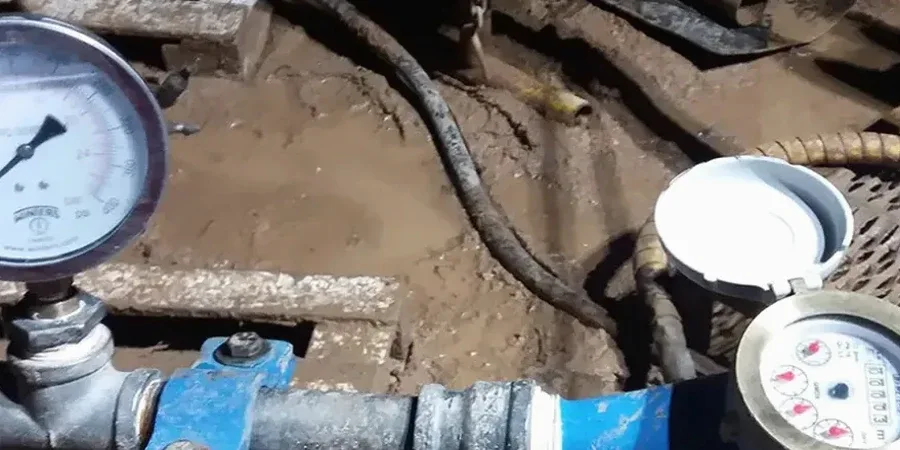
Local geotechnical conditions in Terrebonne
The rapid residential expansion along Highway 25 and the new Île-Perrot connector has pushed development onto Terrebonne's glaciolacustrine clays, where pore pressure dissipation takes decades. Skipping a field permeability test here risks two failure modes: heave during deep excavations and long-term consolidation settlement when drainage paths are misjudged. The Champlain Sea clays are notorious for their sensitivity—permeability values can drop three orders of magnitude between weathered crust and intact deposit. A Lefranc test at multiple depths catches this contrast before the shoring design is locked in. In the limestone bedrock beneath the urban core, a Lugeon test prevents the classic error of assuming low permeability rock and then discovering open fractures during dewatering, a scenario that stalls earthworks and triggers costly emergency grouting campaigns.
Our services
Our field permeability program covers the full workflow from test interval selection to calibrated hydrogeological modeling, adapted to Terrebonne's specific stratigraphy:
Lefranc Permeability Testing
Variable and constant head tests in soil boreholes. We isolate target layers with pneumatic packers and record k-values for design of permanent dewatering systems, infiltration basins, and earth retention structures.
Lugeon Packer Testing in Rock
Five-stage pressure injection testing in bedrock. We quantify fracture transmissivity, detect hydraulic jacking, and define grouting thresholds for dam foundations, deep excavations, and tunnel pre-excavation grouting.
Questions and answers
What's the cost range for a field permeability test in Terrebonne?
A full Lefranc or Lugeon testing program typically ranges from CA$830 to CA$1,550 per test interval, depending on depth, access conditions, and number of packer stages. Mobilization for the Mille-Îles corridor or northern agricultural zones may add a logistics surcharge.
How long does a Lefranc test take on site?
A single Lefranc interval requires approximately 45 to 90 minutes of stabilization time once the borehole is prepared. A full day of testing in Terrebonne's silty clays typically yields three to five reliable k-value measurements, depending on how quickly the water level stabilizes in the packer-isolated section.
Which method should I use for a foundation on Terrebonne limestone?
If your bearing stratum is the Lorraine Group limestone, the Lugeon test is the right choice. It measures fracture flow under pressure, which matters for basement waterproofing design and for predicting inflow during excavation. A Lefranc test in the overburden above the rockhead complements this by characterizing the soil permeability before reaching bedrock.
Can you use field permeability results to design a stormwater infiltration system?
Absolutely. Lefranc test results deliver the in-situ saturated hydraulic conductivity needed to size infiltration trenches, dry wells, and permeable pavement subgrades. Our reports include k-values at the exact depth of your proposed infiltration surface, following the NBCC and CSA A23.3 exposure class requirements for concrete in contact with groundwater.